
Halifax Nostalgia.
In my hometown, the buildings may crumble and disappear, but the memories--and the emotions they carry--stay with me.

It is funny the things you forget, a writer I admire once wrote, referring to how the diminishing of memory wipes so many things from the brain’s hippocampus.
Funny what you remember, too.
Halifax, the East Coast Canadian city where I was born and live, used to be a stagnant, sleepy burg, wedded indelibly to the past, that hadn’t seen a construction crane for decades.
Now it’s an on-the-rise place, exhibiting all of the classic growing pains of a city expanding too quickly for its own good: snarled traffic, a shortage of affordable housing, that sort of thing.
In the part of the city where I live, my people—homeowners, many of us getting up there—feel a deep sense of loss over the way that the old buildings, which we’ve been walking past for so long, are coming down, often so that residential units can go up.
I feel it too, although in a different way.
My sense of connection to Halifax, how it is and how it was, is profoundly deep.
It was there as a child, before I even had anything to be wistful about, when I would sometimes sneak away from our neighbourhood to wander streets where, briefly, we once lived.
Sometimes, I feel what I can only describe as nostalgic for a time or place that I’ve never experienced, an emotion that John Koenig in The Dictionary of Obscure Sorrows, has labelled anemonia.
Thus, my response to the bulldozing of Halifax’s buildings may be different than it is for others.
My only possible explanation is that my connection to the city for some reason is rooted in emotion and memory, real or imagined, rather than physical structures.
It seems like what I hold onto isn’t the skyline, but the moments, people and experiences that have for so long made Halifax feel like home to me and probably always will.
So, when I walk or drive around the city of my dreams, my heart sinks a little when I see my old high school, now reconfigured as a hospital parking lot, or the corner where I first drew a paycheque as a gas station jockey, morphing into a senior’s residence.
I may sigh, ever so slightly, at the empty hole where a string of Georgian homes which I once supplied with the morning newspaper stood, or at the sight of the old paper itself, in the centre of the city since before the days of Confederation, but now home to a glitzy Convention centre, a brew pub, and other 21st century establishments.
Or stand there blinking in puzzlement, wondering if I missed the exact moment that my old buddy’s house became some swanky condos, and a French café emerged like a chrysalis from the store where I used to squander my allowance on Cherry Blossoms, mojos and black cat gum.
But I have to tell you the feeling is fleeting. The sense of connection lives on even when the buildings are nothing but a memory.
I have often wondered if it has something to do with living in a city enveloped by the past--that has experienced all manner of tragedy and tumult, that has seen moments of ringing triumph and low chicanery, that has been a player, if only a bit one, in many of history’s enduring events.
In a place like Halifax, it has always seemed, history is vivid enough that the bygone and present intersect.
If you are inclined to this kind of thinking, it can be like you are living in a Patrick Modiano novel, the boundaries between then and now blurring, time seeming layered rather than linear.
Palimpsests, walls that whisper of former buildings, streets that carry the lingering traces of the past, are everywhere if you look hard enough.
You can feel like you are walking in the shoes of others, in a city where so many rogues and heroes have strutted before.
For this, of course, a romantic’s deluded soul is necessary. It must give you something—the odd thrill of living vicariously through ghosts—to know that when you are strolling innocently down some paved-over streets you walk where Joe Howe did, perhaps, in his mind, working out his famous defense of freedom of the press, or his enemy Enos Collins, oblivious to his surroundings, calculating his next move in the accumulation of the greatest fortune in the British empire.
And that there was a time, if you turned towards the harbour you might have seen the British Frigate HMCS Shannon hauling the captured American frigate USS Cheapeake into port after its capture, the allied ships massing before a World War Two Atlantic crossing, or the French ship Mont-Blanc, loaded with high explosives headed for its fateful collision with the Norweigan relief ship SS Imo.
By the same token, I feel like I have something on the other folks filling a downtown that now graces the pages of travel magazines, by knowing that ”a nest of brothels and dance-houses” once flourished there according to R.H. Dana, the author of Two Years Before the Mast, and that the glittering city now experiencing its moment in the sun, was once wicked enough that, in the words of a visiting clergyman, the business of one half of the town of Halifax was to sell rum, and the other half to drink it.
Most of the pleasures that a nostalgia-prone person experiences are private ones. In a city where you were born and have lived most of your life, there are plenty, even if the homes, schools, churches, eateries and grog houses where so many of them occurred are gone or going.
The other day, I walked into a climbing gym—Halifax now has at least two—not because I felt like chalking up, but because a long time ago, that building was a big part of my life.
The truth is that I have never forgotten the pleasures of Saturday afternoon matinees at the Oxford Theatre. If anything, those moments have been buffed and burnished over time to the point where they have acquired the glow of a Frank Capra movie.
Now only some bricks on a west-facing wall in the gym might have been around when my friends and I sat below, buzzing on licorice all-sorts, popcorn and Mountain Dew, senses bombarded by images of six-gun shooting gun lawmen, knights off to battle dragons, B-list starlites adorned in filmy sword and sandal costumes, and burned-out studio actors reduced to chewing the scenery with vampire fangs.
I don’t see any of those fellas who sat with me in that theatre anymore: some of them left Halifax long ago. Five of them have left this earth.
Yet, when I think about that place—physically all but gone, but still living on in my head and heart--we are forever young.
The other day, that memory made me happy, not sad. It always does
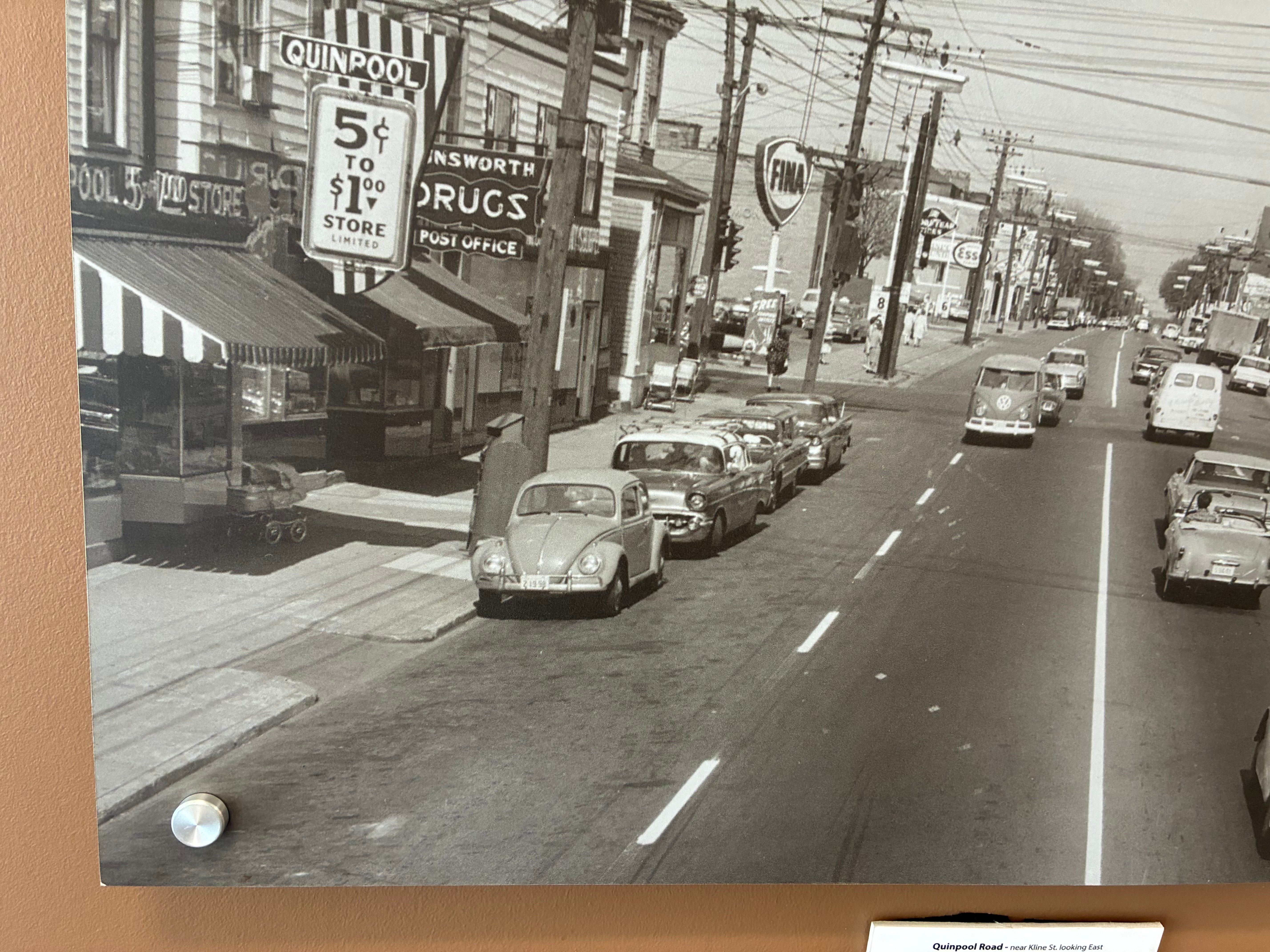
.
Excellent evocative writing fron John who early May 2025, set his whimsical journalist style to my humble You Are Not Alone, I Will Listen, Cross Canada Journey. John turned this "septuigian on creeky knees" into a person of interests for local, national and International media. Thank you for your kindness John. My journey continues in British Columbia returning west to North to east in Spring of 2026.
This is so rich in imagery and emotion. Thank you for inviting us in.